Showing posts with label slavery. Show all posts

Saturday, May 30, 2026

James by Percival Everett


Rating: 3 of 5 stars 
Pages: 320 pages
Published: March 2024

Every so often, a book is released and suddenly, it’s everywhere—the talk of the literary world, the winner of major awards, the darling of critics and book clubs alike. That was James by Percival Everett in 2024. I bought my copy in 2025 and finally read it this year. Sorry, not sorry, but I don’t get the hype. Everett is often praised as an exceptional and prolific writer, and while that may be true, this novel simply didn’t work for me. 

Marketed as a retelling of The Adventures of Huckleberry Finn by Mark Twain through the eyes of Jim, who we learn prefers James, the concept immediately intrigued me. I expected a story that offered fuller representation and deeper humanity than Twain’s original. In preparation I reread Huckleberry Finn, which was a challenge due to the heavy dialect spoken by every character. So, when I began James, I appreciated the clear, more accessible dialogue.

But the story itself is not a retelling in the traditional sense. It felt as though Everett borrowed the characters then placed them in an entirely different plot and setting. The connection to Twain’s novel was tenuous at best, and that disconnect made it difficult for me to settle into the narrative. 

However, my biggest issue was the extreme brutality depicted throughout the book. While I understand the importance of acknowledging the horrors of enslavement, the graphic nature of these scenes felt excessive, at times exploitative, and not really necessary to move the plot forward. I was disappointed that a novel written by a person of color leaned so heavily into violence without adding meaningful depth to the story. I also found the major plot twist toward the end, and James actions after revealing it, to be a bit ridiculous and a bit of a stereotypical trope. Finally, every female character seemed to exist solely as a plot device, never fully developed or given emotional complexity. 

Many people say this book is humorous. I did not find it funny. I found it horrifying and disappointing, despite the glowing reviews and widespread acclaim. 

Recommendation: I often say here, not every book is for every one, and this one was definitely not for me. The concept is brilliant, but the execution just didn’t do it for me. Perhaps, I will try another of Everett’s books in the future. 

Until next time ... Read on!

Regardless of whether I purchase a book, borrow a book, or receive a book in exchange for review, my ultimate goal is to be honest, fair, and constructive. I hope you've found this review helpful.

Saturday, March 7, 2026

The Adventures of Huckleberry Finn by Mark Twain


Rating: 2 of 5 stars 
Pages: 327 pages
Published: January 1885

I grabbed a free electronic copy of The Adventures of Huckleberry Finn by Mark Twain from the Fable reading app as a bit of a homework assignment. I wanted to reread this novel as an adult and in preparation for my virtual book club's upcoming read of James by Percival Everett in the months to follow. Since James reimagines the story from Jim's perspective, I wanted to revisit the original text to gain a better appreciation of the modern retelling. It's been years, OK decades, since I read this book, and approaching it now as a more well-read and more critical reader gave me a very difference experience.

At just over 300 pages, The Adventures of Huckleberry Finn is not long. It follows the titular character, who is referred to as Huck, as he escapes his abusive (and possibly unstable) father and travels down the Mississippi River with Jim, an enslaved man seeking reunification with his family. On their journey, they meet con men, feuding families, and a series of misadventures. Many literary scholars consider this book the great American novel, praising Twain's use of an engaging plot and sharp satire meant to expose the hypocrisy and moral contradictions of the pre-Civil War era in the United States. 

Despite its critical and historical acclaim, I didn't fully enjoy it. The dialect, while intentional by the author, made for a very challenging read. I read the book in small doses - a couple of pages at a time - as I had to remain extremely focused to discern not only what Jim was saying (as a lot of readers have noted) but the speech patterns of Huck Finn, Tom Sawyer, and the other secondary characters. So, as I mentioned it's not a long book, but it certainly felt that way. Beyond the heavy, indistinguishable dialects, I struggled with the stereotypes. Jim is a main part of the story, yet he's frequently reduced to a caricature, often only being use as a plot device to move the story along. I felt he was very underdeveloped and his humanity was sacrificed for the ignorance and antics of Tom Sawyer, Aunt Sally and the like. Yes, the book was written "post-slavery" but still during a deeply unjust period in American history. And frankly, I just don't think Twain, as a white man in the late 1800s, was equipped to tell Jim's part of the story with the respect it deserved. 

No spoilers here, but after trudging through more than two-thirds of the book, the ending fell flat for me. The tonal shift, the reappearance of certain characters, and the way Jim's fate is handled did the whole adventure a disservice. I think there was a missed opportunity for deeper reflection and a more meaningful resolution. But again, reading this in 2026, maybe the author simply wasn't capable of delivering that in his time. 

Long story short: I didn't enjoy the book, but I am glad I read it. It's a classic for a reason, and I think reading it again will provide a richer experience when I pick up James later this year. 

Recommendation: On this blog, I often say, not every book is for everyone, and this is a prime example for me. Twain couldn't tell a Jim's story with proper representation because it wasn't one he lived or was even stood adjacent to. This makes me all the more excited to read Percival Everett's take. I have high hopes his perspective will be more inclusive and attuned to Jim's point of view. More on that later! 

Until next time ... Read on!

Regardless of whether I purchase a book, borrow a book, or receive a book in exchange for review, my ultimate goal is to be honest, fair, and constructive. I hope you've found this review helpful.

Monday, April 22, 2024

All We were Promised by Ashton Lattimore


Rating: 4.5 of 5 stars 
Pages: 368 pages
Published: April 2024

All We Were Promised is the debut historical fiction novel by Ashton Lattimore, an award-winning journalist and former lawyer. The book is set during the pre-Civil War era in Philadelphia, Pennsylvania and features three female protagonists serving as soldiers for justice: Charlotte, who has escaped slavery with her father, who is hiding in plain sight while his daughter poses as his housemaid; Nell, a well-to-do aspiring abolitionist; and Evie, a freedom-seeking friend from the plantation that Charlotte and her father absconded. All three of these characters' lives collide in Philadelphia where they help each other to make the ideal of freedom a reality because none of us are free unless we are all free (Fannie Lou Hamer). 

The premise of the story is not new. There have been many non-fiction and fiction stories that covered the topic of Black people who knew they did not belong to anyone and fought for something different. Additionally, the phenomenon of passing (e.g., Imitation of Life, Did You Hear about Kitty Karr, and Passing, etc.) is touched on with the relationship between Charlotte and her father. But overall this books is about American's greatest ill - its participation in the transatlantic slave trade. Do we need another book about slavery? Yes, let us continue to tell the stories and learn from history lest we repeat them, especially in today's society when the historical facts are being skewed to pacify those who cannot accept the atrocities that occurred in these United States of America. 

I truly enjoyed reading this story. I think the author did a wonderful job with portraying the horrendous acts of one group of people treating another group of people as property without being overly graphic. Her research into the actual, historical event of the burning of Pennsylvania Hall within days of its grand opening was not only handled well, but was so compelling it enticed me to seek out more about this true event. Lattimore also did a great job of created in-depth characters in Charlotte, Nell, and Evie. She also presented Charlotte's father in such a way that I was truly angry with this fictional character. To me, he was simply a slavemaster of another kind. When a book evokes emotion and provokes action, I tend to label it a good one. 

My only critique was the lack of development of some of the secondary characters and plots - like that of the relationship between Alex and Nell. I would have loved to know more about the Darcel, who befriended Charlotte as well as Irene and Daniel, who she left behind at the plantation and were mentioned by name several times throughout the book but had no fleshed-out back story development. 

Recommendation: This novel had strong themes of justice, grief, and belonging. The ending was a little abrupt, and I feel like there could have been so much more to it. My hope is that Lattimore writes a sequel to All We Were Promised because there are so many promises unfulfilled in this first writing. If she does write a follow-up story, I'll be first in line to get a copy. 

Until next time ... Read on!

Regardless of whether I purchase a book, borrow a book, or receive a book in exchange for review, my ultimate goal is to be honest, fair, and constructive. I hope you've found this review helpful.

Sunday, October 31, 2021

Kindred by Octavia E. Butler


Rating: 5 of 5 stars 
Pages: 287 pages
Published: June 1979

So, I read Kindred by Octavia E. Butler with my new beau who wanted to connect with me through one of my favorite pastimes … reading. 😍 This historical, science fiction novel - the first of its type written by a Black woman - is about a young woman, Dana, who in present day, is a married 26-year old in the year 1976. However, she unexplainably and involuntarily travels back to the antebellum south via a Quantum Leap-esque time-warp to oversee a young white boy who is connected to her, and then just as mysteriously travels back to present-day. She never knows when it’s going to happen or how long she will remain in either time period. 

Because of the topical nature of the book there were many passages that were difficult to read and envision. As with most stories like this, there were extreme acts of evil but also fleeting moments of compassion. The insecurity the protagonist felt in vacillating between the two worlds was easily imagined by the reader and also gave an idea of how enslaved people may have felt when being forced to interact with cruel and spontaneously hateful slave owners. 

This is an interesting take on historical fiction with an unexpected science fiction twist. It’s creative, well-written and should be read. Science fiction is not my genre of choice, but Kindred is one of my favorite books.  

Recommendation: I recommend this book to anyone. It’s a fast and heart-wrenching read. I think mature teenagers and adults alike can appreciate this writing. Let us continue to learn about history in a myriad of ways lest we repeat it, OK? 

Trigger warnings: descriptive physical violence, rape

Until next time ... Read on!

Regardless of whether I purchase a book, borrow a book, or receive a book in exchange for review, my ultimate goal is to be honest, fair, and constructive. I hope you've found this review helpful.
Saturday, June 2, 2018

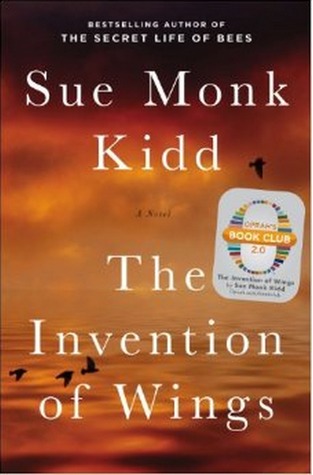
The Invention of Wings by Sue Monk Kidd


Rating: 4 of 5 stars
Length: 384 pages
Published: May 2015


In December, my book club - Richly Read - did a gently used book swap, and I scored The Invention of Wings by Sue Monk Kidd. I had heard good things about the book. I also think it was an Oprah Book Club selection at one point. I was really excited to dig in, but only just got time to start reading it in late May. It was worth the wait! 

The book fits the historical fiction genre, but is essentially a creative biography of the Grimké sisters, specifically Sarah Grimké, and their work to abolish slavery and their fight for women's equality in the United States in the 19th century. Interwoven is an account of a fictional slave character, Hetty "Handful" Grimké, who is given to Sarah on her 11th birthday as a waiting maid of sorts. The book alternates perspectives between Sarah and Handful where the reader learns of their lives and struggles as a woman and a woman slave, respectively. 

It took me a bit to get into this story, but I attribute that to me and not the author. The prose is beautiful and the story is heart-wrenching. By the end I was totally and emotionally invested. Last year I read A Tangled Mercy by Joy Jordan-Lake, which features some of the same real people/literary characters and historical events that are featured in The Invention of Wings. If you haven't already I'd encourage you to read both books, starting with Kidd's book. This book is yet another perspective on a horrible time in U.S. history, but also very important that we remember lest we repeat the same atrocities. Just like the Grimké sisters stood up for justice in a time when it was very unpopular to do so. We still need people of all races and backgrounds to stand up to the continued injustices that permeate our society today. So, while a book steeped in a time where African Americans were only considered 3/5 of a person, we readers can still find value and relevance today. 

Recommendation: I enjoyed this book, not because it is an easy read, but because it is an important one. I encourage you to pick up a copy today.  

Until next time ... Read on!

Regardless of whether I purchase a book, borrow a book, or receive a book in exchange for review, my ultimate goal is to be honest, fair, and constructive. I hope you've found this review helpful. 

Sunday, May 6, 2018

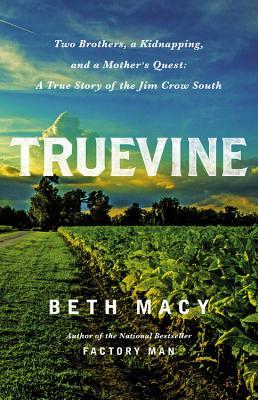
Truevine by Beth Macy


Rating: 5 of 5 stars
Length: 448
Published: October 2017


Many moons ago, I set up an IFTTT.com recipe where the most popular book-related articles from The New York Times are gathered and delivered to my inbox each week. I am pretty sure I learned about Truevine: Two Brothers, a Kidnapping, and a Mother's Quest: A True Story of the Jim Crow South by Beth Macy through this weekly email. I added the book to my ever-growing TBR (to be read) list, and I finally got the opportunity to dive in May.

Truevine is a historical account about two albino brothers who were essentially kidnapped by a circus manager and forced to work in the circus for many years without pay. All the while their mother searched for them eventually finding them and taking on one of the biggest names in the circus industry. 

Macy did a great job of researching, synthesizing, and presenting the information, not only about George and Willie Muse, but also about life in the circus during this time and the Jim Crow south. I cannot summarize this book accurately in one short blog article. There is a lot of detail that provides a greater picture of what people of color had to endure from the early 1900s through present day. My mother asked me why I wanted to read such a painful book. She is correct. It is a painful book, but it is an important one in that it adds another facet of African American history to my personal knowledge. Moreover, it gives me a greater appreciation for my blessings today. We have yet a long way to go, but we have come so far because others have paid the price. Reading George and Willie's story continues to teach me that. 

Recommendation: This is one of my favorite non-fiction reads. I would recommend it to students, to adults, to anyone seeking a greater understanding of the sordid history of our country. We must learn it so we dare not repeat it.  

Until next time ... Read on!

Monday, December 11, 2017

A TANGLED MERCY BY JOY JORDAN-LAKE

Image credit: Melyssa

Rating: 4.5 of 5 stars 

I purchased A Tangled Mercy by Joy Jordan-Lake through Amazon's Kindle First program for Prime members in October of this year. Each month, Amazon offers one free e-book download from a selection of newly- (or soon-to-be) released novels. This particular month, a hard copy was offered at a discounted price.

The synopsis of this story intrigued me. The protagonist, young graduate student Kate Drayton, is in the midst of what some might call a quarter-life crisis. Her mother has recently died. She's never had a solid relationship with her father. And she experiences a bit of an emotional breakdown while teaching at Harvard. All of this compels her to travel to Charleston, South Carolina, where her now-divorced parents met. While there, she works feverishly to finish her mother's research on the failed slave revolve of 1822 in Charleston, in hopes of saving her own academic career.

The story is told in alternating time periods, 1822 and 2015, both set in Charleston. It is part historic (There was really a failed slave revolt in 1822, and some of the characters the author references are real people from the 1800s.), part mystery, and part drama. The hard copy is about 430 pages, but it doesn't feel like that at all. The pace is good. I often found myself racing through chapters as Jordan-Lake would leave a cliff hanger at the end of one time period then switch to the other time period and leave yet another cliff hanger in the very next chapter, motivating me to read much more than a page before bedtime.

While some have criticized how the author concluded the story (no spoilers) and merged the two time periods together, I quite enjoyed it. The book does end with everything tied neatly in a bow and all the big questions answered. Usually this seems trite to me. But for whatever reason - the author's talent, the time of year, personal things going on in my life - I appreciated the ending. It was complete and hopeful, and we all could use a lot more of that right now.

Recommendation: This historical fiction novel is a great read for any time of year. I finished it in about a week. I would recommend it to anyone who enjoys mysteries and would also like to expand their knowledge of the oppressive American institution of slavery.

Until next time ... Read on! 

Sunday, May 21, 2017

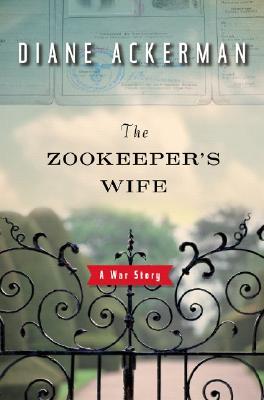
THE ZOOKEEPER'S WIFE BY DIANE ACKERMAN

Image: goodreads.com
Rating: 4 of 5 stars

I was really excited to read The Zookeeper's Wife by Diane Ackerman. One because I nominated it as a book club selection (and it won! I rarely win things.) and two because I enjoy reading books set during the WWII/Holocaust time period.

This well-researched non-fiction book tells the story of a zookeeper, Jan Zabinski, and his wife, Antonina, who, together, saved more than 300 Jewish residents after Germany invades Poland. By hiding them in plain sight, the couple and their young son work together to smuggle Jews out of the Polish ghetto and hide them in the zoo before pushing them along the "Underground." Similar to the Underground Railroad in the United States during slavery, the Warsaw Zoo was a stop for many on the path to freedom and away from the horrific torture and terror of the Nazis. Much of the content is pulled from (and attributed to) Antonina's diary in which she documented the daily activities at the zoo.

At times the book was a bit difficult to read because of the enduring injustices and abuses to not only people but also animals that were recklessly used for sport and food. Knowing the history does not help numb the pain endured. The author paints a vivid picture of the time period by viewing it through a slightly different lens. However, the book is bearable, because in times of trouble, there are always helpers. This book, of course, focuses on Antonina and what she and her family did to help, but Ackerman also gives nods to other people who risked their lives to save Jews.

At the end, the author quotes Jan describing - in the most beautiful, relevant way, his wife's bravery during that tumultuous time:

"Her confidence could disarm even the most hostile. It wasn't just that she identified with them, but from time to time she seemed to shed her own human traits and become a panther or a hyena. Then, able to adopt their fighting instinct, she arose as a fearless defender of her kind." 

Ackerman does get a little bogged down in documenting the details and proving the accuracy of her content by offering pervasive annotations and citations throughout. Because of this the book sometimes reads like a dissertation rather than a story, and I tend to appreciate non-fiction that reads a little more like fiction than this book did.

Recommendation: If you are a slow reader who gets easily distracted, you may find it difficult to make it through this book. However, this book does provide another perspective on this time period that is worthy of telling. A movie by the same name featuring Jessica Chastain was released in April of 2017. While I haven't seen it, my guess would be that the movie is a little easier to digest after Hollywood adds its drama and removes some of the mundane detail the slowed the pace of the book.

Until next time ... Read on!

Saturday, March 25, 2017

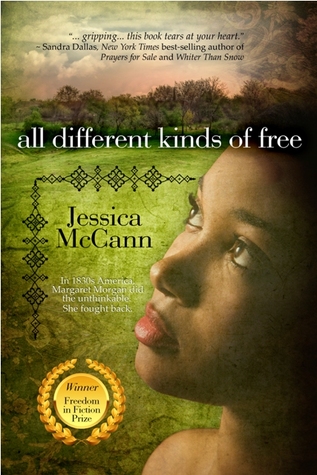
ALL DIFFERENT KINDS OF FREE BY JESSICA MCCANN

Image Credit: goodreads.com
Rating: 2 of 5 stars

Although All Different Kinds of Free was published a mere 6 years ago in 2011, it was next to impossible to find a hard copy readily available for purchase in the Dallas/Fort Worth metropolitan area. That probably should have given me an indication of its quality. However, I purchased and dug into the story as it was a book club selection.

The author, Jessica McCann, made an attempt at producing a creative historical fiction novel based on an actual U.S. Supreme Court case (Prigg v. Pennsylvania). There was great opportunity with the U.S. on the cusp of the Fugitive Slave Act of 1850 and the Civil War, shortly thereafter. I don't think McCann was successful in advancing a well-rounded story. There were gaps in her story, typos in her copy, and characters that were not fully developed. After plowing through the 267 pages (that felt more like 672 pages), the ending seemed rushed, like McCann was being forced to get her book to publication, resulting in a conclusion that wasn't particularly satisfying nor complete.

The story is set in the 1830s, during a time when the country was becoming more divided on the morality of the institution of slavery. The main character, Margaret Morgan, was living as a free woman with her family in Pennsylvania. Because there is some ambiguity about her freedom status, her former owner takes advantage of this to produce financial gains for herself. Her former owner hires a bounty hunter to kidnap her and her children (one, who was undeniably born free). The Morgans are forced into slavery to help alleviate debts of Margaret's owner.

Meanwhile, McCann offers up the nitty gritty details of the Supreme Court case regurgitating what is probably the court proceeding's transcript, verbatim. I found this section to be informative, but it slowed down the pace of the story a great deal.

I didn't find any redeeming value in this book. Margaret's former owner clearly has a change of heart, but it's too little too late. Margaret's husband sacrifices a great deal trying to get his family back. The lawyer that argued the Supreme Court case to help prove that the kidnapping was illegal wasn't successful and becomes depressed. Margaret's hometown in Pennsylvania experiences violence and riots as a result of the Supreme Court ruling. I think McCann tried to give the reader some hope at the end of the story through Jim Green. However, after so many defeats it's difficult to see that as a true win, especially since the story wasn't developed beyond Jim's heroic actions and the story ended so abruptly.

I understand that slavery is often a central topic in historical fiction. However, this was not the best execution. She would have been better served writing this as a research paper or a literary journalism article, perhaps.

Recommendation: I purchased this ebook because it was not available at my local library nor was it available in hard copy at any bookstores in my area. I wish I could get my money back. Clearly, I am not extending a recommendation to read this book. There is a plethora of stories about slavery. Choose another one to read.

Until next time ... Read on!

Monday, February 27, 2017

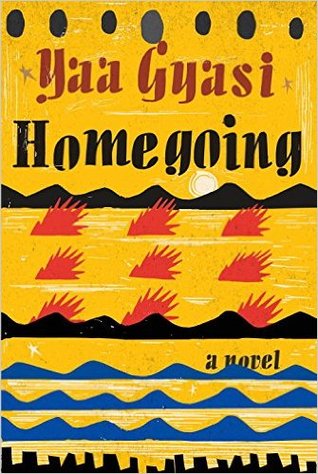
HOMEGOING BY YAA GYASI

Image Credit: goodreads.com
Rating: 5 of 5 stars

This is what I call a solid debut! Yaa Gyasi's Homegoing was a wonderful read that spoke to my soul. Not because it was a story about slavery, necessarily, but rather one about family.

Secondary to the familial theme was the author's documentation of the African and black American cultures. Her work is proof that knowledge and maturity do not necessarily correspond with age. If this work is indicative of her budding career, I would bet she will have a long and successful one as a writer.

Homegoing is about two half-sisters born in Ghana and later separated from their homeland as a result of circumstances beyond each one's control. From the 1700s to present-day, we learn about each sister's fate and their lineage. Effia marries a British slaver while Esi becomes a slave shipped off to the U.S. From there, each chapter focuses on one person from the next generation, alternating between Effia's and Esi's respective families.

My only complaint about this novel is, because of the structure, the family tree that is printed in the front of the book is required for understanding. This might make it a little more difficult for those who choose the audio book and do not have the ability to refer back to the family tree.

The descriptive writing, the careful detail, and the honor to the culture are all factors in my rating. I thoroughly enjoyed the book. I do believe we write what we know, and that is typically what resonates with us as readers too. Gyasi has done a fine job, and I look forward to reading more of her work.

Recommendation: Even though this book tackles difficult topics, it does it in a way that makes it an easy read. I highly recommend it for those seeking to read about the African slave trade from a different perspective.

Until next time ... Read on!

Thursday, October 20, 2016

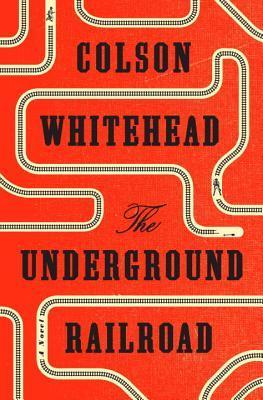
THE UNDERGROUND RAILROAD BY COLSON WHITEHEAD

Image: goodreads.com
Rating: 5 of 5 stars

One of two Oprah 2.0 book club sections this fall, The Underground Railroad by Colson Whitehead is a historical fiction account set during the pre-Civil war era. Before I delve into my review, I will preface my forthcoming comments with this: I will not be able to compose a review that does this book justice. This is my first exposure to Whitehead's craft, and I find his vividly creative prose simply stunning. I hope to one day write half as well as he does. Furthermore, I am sure my review means about .25 of a cent compared to what media mogul Oprah Winfrey had to say about it. But it's one of my favorite books of 2016, so I will attempt to convey my awe in this brief review in my little space in the blogosphere.

 The story's protagonist, Cora, is a young field slave forced to work a vicious plantation in Georgia. Motivated by a fellow slave, Caesar, and inspired by the mother who abandoned her in search for her own freedom, Cora, too, decides to run. The book progresses with Cora traveling from state-to-state on a literal railroad underground. Each stop offers an opportunity for the author to capture racial inequities and subjugations through historical storytelling. Driven by a piercing curiosity of her mother's fate and burning desire for freedom, Cora discovers"the true face of America" through her travels. Through every page Cora, as well as the reader, hopes that her ticket on this railroad is not round trip, and both Cora and the reader learn that captivity extends beyond shackles and chains.

The gem in this book is, although it's set over 100 years ago, the themes are real and relevant today. People get tired of being mistreated and abused and just decide to do something. Each action, in an attempt to move society - sometimes begrudgingly - forward. At it's core, this book is a demonstration of what real-life rabble rousers did then and still do today - They say this is enough, and I am going to do my part to change the course by changing my story. After reading this book and examining the disparities in how people of color are treated today, it begs the question - how far have we really come? How do we move forward without looking back, and should we? And will we ever truly be free?

Recommendation: I would definitely recommend this book. Most of what I've learned about American history (read: American, not African-American) has come post-education. While this is a work of fiction, it is a nice supplement to my quest for knowledge. Please note it depicts the atrocities of the time, so it the illustrations are vivid, graphic, and extremely violent.

Until next time ... Read on!